Metal Roofing Alliance Member
TVA Preferred Partners Network
Music City Specialists
Nashville, TN
Licensed & Insured
BBB A+
.avif)
Call Anytime
(615) 649-5002Free Estimate

The Metal Roofers installs, replaces, repairs, and restores commercial metal roofing systems for warehouses, industrial buildings, retail centers, churches, restaurants, medical offices, multifamily properties, auto shops, storage facilities, and owner-occupied commercial buildings across Nashville and Middle Tennessee.
Commercial metal roofing is not one product. A low-slope warehouse may need mechanically seamed standing seam with concealed clips. A shop or storage building may be a good fit for PBR or R-panel. An aging screw-down metal roof may qualify for coating restoration if the deck, insulation, fasteners, seams, and rust conditions are still sound. The right system depends on roof slope, deck type, span, drainage, rooftop equipment, wind exposure, foot traffic, and how the building is used every day.
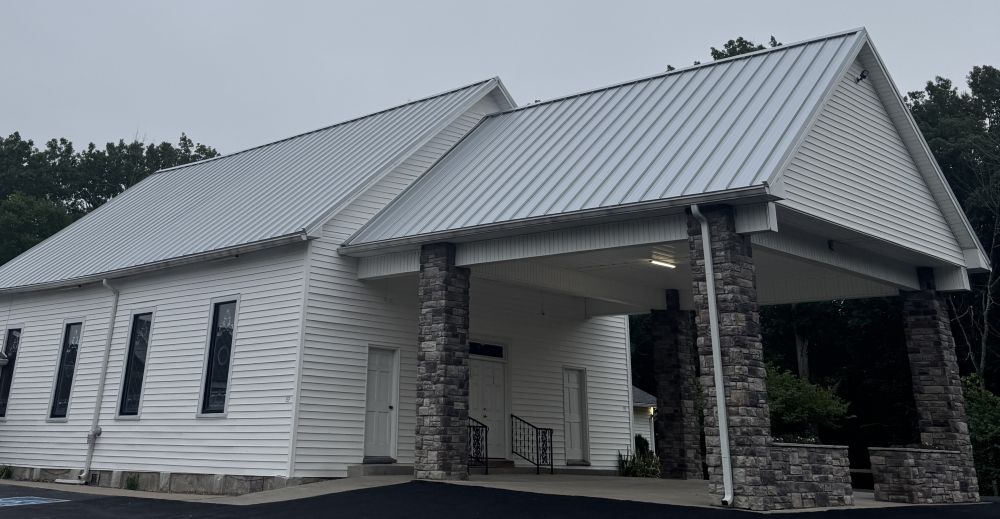
Most Nashville commercial buildings are not 100% metal or 100% membrane. A retail center may use standing seam on the visible pitched front and TPO on the flat rear roof. A restaurant may need PVC around grease vents while keeping standing seam on the street-facing roofline. A warehouse may need mechanically seamed panels on long low-slope bays and coatings on an older metal annex.This is not a compromise. It is how commercial roofs are built to stay dry while balancing slope, drainage, budget, code, roof traffic, rooftop equipment, and appearance.


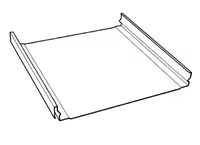
For commercial roofs that need concealed fasteners, low-slope metal performance, long panel runs, and controlled thermal movement.Mechanically seamed standing seam is the first commercial metal conversation when the roof has long runs, lower slope, high visibility, or a low tolerance for exposed fastener maintenance. The panels are installed on clips, then folded closed with a mechanical seaming tool. Depending on the profile, mechanically seamed systems may use 1-inch, 1.5-inch, or 2-inch seam heights. The deeper 2-inch profiles are commonly used when the roof needs tighter water control and better low-slope performance.
This system belongs on warehouses, distribution buildings, schools, government facilities, retail centers, churches, medical buildings, and multifamily properties where the roof needs a long service life and fewer exposed maintenance points. The concealed clip system lets long steel panels move through Tennessee temperature swings while still transferring uplift loads into the structure. That movement control is the reason mechanically seamed standing seam is different from screw-down metal.
Locked by mechanical seamer
Lower than snap-lock systems
22-ga for high wind/load
Thermal expansion capable
Non-combustible
Engineered clip spacing

For light-industrial and owner-occupied buildings that need wide coverage, strong ribs, straightforward service, and lower installed cost than concealed-clip standing seam.PBR stands for purlin-bearing R-panel. The lap side includes an added bearing leg, giving the panel more metal-to-metal contact where one panel overlaps the next. A typical PBR panel uses 36-inch coverage, a 1.25-inch rib height, 12-inch rib spacing, and 22-, 24-, or 26-gauge steel. It can be installed over open framing or solid substrate when the profile and engineering allow it.
PBR is a strong option for auto shops, storage facilities, machine shops, smaller warehouses, agricultural buildings, barndominiums, and owner-occupied commercial buildings where the roof has enough slope and the owner wants practical metal performance at a lower price. The tradeoff is exposed fasteners. The screws, washers, lap sealant, fastener pattern, and maintenance plan are part of the roof.
Deep rib for rigidity
2:12 with sealant tape
24-ga for heavier spans
EPDM washers for seal
Fast install speed
No specialty tools needed

For flat or near-flat commercial roof sections where metal panels are not the right waterproofing system.Many Nashville commercial buildings combine metal on pitched sections with TPO on flat areas. TPO is a single-ply thermoplastic membrane installed as a continuous waterproof surface over insulation and cover board. The seams are heat-welded, which means the sheets are fused together with hot air rather than relying only on adhesive at the lap.TPO is useful on offices, retail strips, restaurants, medical buildings, multifamily buildings, and flat roof sections where the building needs reflectivity, low weight, and a clean membrane surface. It is not a metal roof, but it often belongs on the same commercial building because slope changes across the roof.
Single-ply, heat-welded
True flat capable
80 mil for high-traffic
Monolithic, testable
Reduces cooling load
With approved substrate
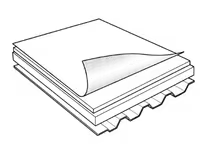
For flat commercial roofs with grease vents, chemical exposure, rooftop equipment, and regular service traffic.PVC is a reinforced single-ply membrane used on flat and low-slope commercial roofs where chemical resistance matters. It is especially useful around restaurants, food service buildings, commercial kitchens, and roof areas exposed to grease exhaust. Like TPO, PVC seams are heat-welded into a watertight surface, but PVC has a stronger chemical-resistance case in roof areas where oils, fats, and rooftop contaminants are part of the building’s use.
PVC can be mechanically attached or fully adhered depending on the building, deck, insulation, wind requirements, warranty, and traffic expectations. On equipment-heavy roofs, a cover board and reinforced service paths can protect the membrane from HVAC technicians, electricians, plumbers, and maintenance crews.
Reinforced single-ply
Fully adhered or mech. attached
Grease, oils, restaurant vents
HVAC, electrical service paths
Cool roof compliant
Lighter, code-compliant upgrade
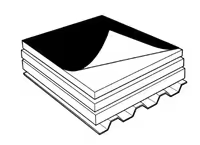
For commercial buildings that need a tough, familiar, multi-ply low-slope system. Modified bitumen is a reinforced asphalt-based roof system commonly installed in two- or three-ply assemblies. It can use SBS or APP modified sheets, with torch-applied, cold-adhered, hot asphalt, or self-adhered installation methods depending on the building and safety requirements.
Modified bitumen remains a workhorse on small to mid-sized Nashville commercial buildings because it is tough, familiar, and handles moderate rooftop traffic well when installed over the right substrate. It is often used on offices, retail strips, churches, older commercial buildings, and tie-in projects where an owner wants a redundant membrane rather than a single-ply system.
SBS or APP modified sheets
Redundant waterproofing
Low-slope specialist
Method matched to building
UV and traffic resistant
With proper insulation
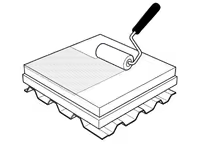
For commercial roofs that need more service life without full replacement — when the deck, insulation, and existing roof are still sound.
A coating is not paint. A commercial roof coating is a liquid-applied restoration system that cures into an elastomeric membrane over an existing roof. On metal roofs, coatings can seal fasteners, reinforce seams, reduce minor leaks, brighten the roof, and add reflectivity. On aged mod-bit or BUR, coatings can restore UV protection and extend service life when the underlying system still qualifies.
Coatings are useful only when the roof is a candidate. If insulation is saturated, the deck is compromised, the membrane is failing everywhere, rust has eaten through panels, or water is ponding in areas where the coating chemistry cannot tolerate it, coating becomes a delay before replacement. The evaluation matters as much as the coating.
Matched to existing roof
To specified DFT
Seams & penetrations first
Not for failing structures
Reduces heat gain
When conditions qualify
Warehouses and distribution buildings usually have wide spans, low slopes, loading docks, open interiors, and a low tolerance for leaks over inventory. Mechanically seamed standing seam is often the right choice on sloped metal sections because long panels can move on clips instead of fighting exposed fasteners.
TPO, PVC, or modified bitumen may still be needed on true flat sections, equipment platforms, or additions where slope is too low for metal. Drainage is the first design question. A large roof with undersized drains becomes a ponding problem fast during Middle Tennessee storms.
Retail centers often have a visible pitched façade and a flatter roof behind it. Standing seam can make the public-facing roofline look clean and permanent, while TPO or PVC can protect the flat rear sections around HVAC units and service corridors.
Work staging matters here. Tenant doors, sidewalks, parking, signage, loading areas, and business hours must be planned before installation. A commercial roof project should not create avoidable disruption for tenants or customers.
Medical and office buildings usually have rooftop units, equipment curbs, service paths, and noise-sensitive operations below. PVC or TPO often belongs on flat roof sections, while standing seam works well on visible slopes where appearance matters.
The details around curbs matter more than the field of the roof. HVAC units need properly flashed curbs, reinforced service paths, and drainage that moves water away from equipment instead of trapping it behind pads and supports.
Restaurants create roof problems that normal buildings do not. Grease exhaust, kitchen vents, frequent service access, rooftop fans, hood penetrations, and chemical exposure all affect system choice.
PVC is often the strongest membrane conversation around grease vents because chemical resistance matters. Standing seam can still work on visible pitched sections, but flat roof areas around kitchen equipment need a system built for contamination, cleaning, and service access.
Auto shops, service buildings, storage facilities, and light-industrial buildings are often good PBR candidates when the roof has enough slope. PBR gives fast coverage, a strong rib, and easier future service because exposed fasteners can be inspected and replaced without specialty seam tools.
For higher-exposure buildings, 24-gauge steel may be a better choice than 26-gauge. For existing metal roofs with sound structure but aging fasteners, seams, or surface wear, coatings can extend service life when the roof qualifies.
Churches and civic buildings often combine steep roof planes, fellowship-hall additions, steeples, dormers, gutters, decorative trim, and older roof sections from different eras. Standing seam is often the best metal system for visible pitched sections, while mod-bit, TPO, or coatings may belong on low-slope additions.
Scheduling matters. Work may need to avoid worship services, school programs, funerals, events, or public meetings. The roof system has to be designed around both the building and the community using it.
Multifamily roofs need careful staging because the building stays occupied. Standing seam can work well on visible pitched rooflines, while TPO or PVC often belongs over corridors, common areas, and flat mechanical sections.
Sound, access, tenant notice, debris control, and phased work matter. The roof may be one structure, but the project affects dozens of residents. The installation plan has to account for that.
Public buildings usually need long-service systems, clear documentation, Class A assembly information, and strict compliance with procurement and inspection requirements. Mechanically seamed standing seam is often the best metal conversation for pitched or low-slope metal sections because it gives concealed fasteners, longer service life, and strong documentation.
Installation timing often revolves around summer breaks, school calendars, public access, and safety zones. The proposal needs to specify the system, not just the price.
Panel profile gets attention because it is visible. The details that decide whether a commercial roof lasts fifteen years or fifty are usually hidden: drainage, wind uplift design, thermal movement, substrate condition, flashing, service paths, insulation, vapor control, and maintenance planning.

Commercial roofs fail early when water has nowhere to go. Nashville gets roughly 50 inches of precipitation in a typical year, and storms often arrive in heavy bursts. Wide, low-slope roofs over warehouses, retail centers, and flex buildings need drains, scuppers, gutters, downspouts, and tapered areas designed to move water off the roof before it becomes ponding load.
On metal roof sections, panel layout should follow the drainage path. Water should not dead-end behind ribs, curbs, parapets, or wall transitions. On membrane sections, ponding water after a rain event is a warning sign that slope, drains, or crickets need attention.

Wind does not just push against the roof. It pulls upward, especially at corners, rakes, eaves, ridges, and parapet edges. That is why commercial roof attachment must be designed by zone: field, perimeter, and corner. The field of the roof may not need the same clip spacing or fastener density as the corner zones.
Mechanically seamed standing seam uses clips engineered for uplift and movement. PBR uses exposed fasteners into deck or purlins. Membranes use plates, fasteners, adhesive, or perimeter securement depending on the assembly. The correct question is not “how strong is the panel?” It is “how is this roof attached in the field, perimeter, and corner zones?”

Long metal panels move. Steel expands at roughly 0.0000065 inches per inch per °F. On a commercial roof with a 140°F surface-temperature swing, a 40-foot steel panel can move about 0.44 inches, a 60-foot panel can move about 0.66 inches, and a 100-foot run can move more than an inch.
Standing seam handles that movement with clips and fixed-point planning. PBR handles it around exposed fasteners and washers, which is why long PBR runs need more caution. If movement is not planned, the roof will show it through oil-canning, stressed seams, fastener elongation, popped screws, or leaks at terminations.

Commercial roofs are not untouched surfaces. HVAC technicians, electricians, plumbers, inspectors, solar crews, sign installers, and maintenance staff walk them. That traffic damages roofs that were never designed for it.
A commercial roof needs service paths, reinforced areas around equipment, properly supported conduit, flashed curbs, and safe routes to rooftop units. A roof that performs perfectly in the field can still fail around equipment if every service call sends workers across unprotected ribs, seams, fasteners, or membrane.

Standing seam is one of the strongest commercial roof platforms for solar because compatible clamps can attach to the seams without drilling through the roof panels. That keeps the water plane cleaner and makes future solar planning easier.
PBR and membrane roofs can also support solar, but the attachment method changes. PBR usually requires engineered mounts through the panel or framing. Membrane roofs require ballast, adhered pads, or attached systems designed with the membrane manufacturer’s requirements. Before any solar installation, the structure, roof warranty, wind loads, access paths, and drainage have to be evaluated.

Commercial roof documentation matters. Insurance carriers, property managers, buyers, lenders, and inspectors do not want vague roof descriptions. They want the system: panel profile, gauge, substrate, coating, fastener or clip spacing, roof deck type, insulation, fire assembly, wind documentation, warranty, and maintenance records.
A steel panel is noncombustible, but fire rating belongs to the full assembly. A wind rating belongs to the tested or engineered system, not just the metal profile. Good documentation reduces confusion after a hail claim, wind event, property sale, tenant build-out, or lender review.
From operational continuity to long-term economics — the realities of commercial roofing in Nashville
The question is not “Can my whole commercial roof be metal?” The question is “What is the slope of each roof section?”
Metal panels shed water. Membranes waterproof flat or near-flat areas. Mechanically seamed standing seam can handle lower slopes than PBR or snap-lock profiles, but dead-flat roof sections still belong in TPO, PVC, modified bitumen, or a properly designed coating restoration if the existing roof qualifies. Many Nashville commercial buildings need both metal and membrane on the same property.
Most commercial reroofs can be staged so the business keeps operating. Standing seam and PBR are installed from the exterior. TPO, PVC, and coatings are also exterior work unless the deck is opened or interior protection is needed.
The planning matters. Restaurants may need noisy work outside lunch and dinner rushes. Medical offices may need quiet staging around patient hours. Warehouses may need crane and lift routes away from loading docks. Retail centers may need sidewalks, storefronts, tenant entries, and parking protected every day.
The cheapest panel is not automatically the cheapest roof. A PBR panel installed on the wrong slope can create fastener and lap problems. A membrane installed over wet insulation can fail early. A coating over a saturated roof delays replacement without solving the cause.
The long-term savings come from avoiding early tear-offs, interior leaks, tenant disruption, roof traffic damage, mold risk, and repeated repair calls. A roof that performs for decades is usually cheaper than a roof that needs emergency service every storm season.
Commercial roofs are large enough that small drainage mistakes become big problems. A drain blocked by leaves, a scupper undersized for the roof area, or a dead valley behind a parapet can shorten the life of the system.
For metal roof sections, water should flow with the panel layout. For membrane roof sections, tapered insulation, crickets, drains, scuppers, and gutters should be designed so water does not sit after a storm. If water is still ponding 48 hours after rainfall, the roof is telling you something.
Commercial roofs are service platforms whether anyone admits it or not. HVAC units, exhaust fans, satellite equipment, solar equipment, electrical conduit, and roof drains all require access.
Standing seam can be damaged by careless walking across seams. PBR can be dented or have fasteners disturbed. Membranes can be punctured by tools, dropped panels, or sharp supports. Service paths and pads are not extras. They are part of keeping the roof alive.
Standing seam is usually the cleanest roof for solar because compatible clamps can attach to the raised seams without drilling through the panels. That does not mean every standing seam roof is automatically solar-ready. The seam profile, panel gauge, clip system, roof structure, wind loads, array layout, and service access still matter.
PBR and membrane roofs can support solar, but the attachments usually require more roof coordination. If solar is likely in the next 5 to 15 years, the commercial roof design should account for it before the roof is installed.
Insurance does not classify a commercial roof by the phrase “metal roof” alone. The carrier may need the roof assembly: panel type, gauge, deck type, clip or fastener schedule, fire rating, wind documentation, coating type, and maintenance records.
Class A fire language should refer to a tested assembly. Wind resistance should refer to an engineered or tested roof configuration. Hail resistance should separate cosmetic damage from functional damage. Documentation is part of the roof’s value.
The biggest savings from a well-designed commercial roof are often avoided costs: no tenant disruption after a storm, no inventory damage, no emergency tarping, no recurring leak tickets, no saturated insulation spreading under a membrane, no premature capital replacement, and no roof-access damage around HVAC units.
A commercial roof is a risk-management system. The invoice matters, but the real cost lives in what happens over the next 10, 20, or 40 years.
A panel can look strong and still be poorly attached. Wind uplift depends on how the roof is secured to the building: clip spacing, fastener density, substrate condition, edge securement, panel gauge, seam type, and roof-zone engineering.
Commercial roofs need field, perimeter, and corner thinking. The corner of a large warehouse roof takes different uplift pressure than the middle of the roof. If a proposal uses one attachment pattern everywhere, ask whether it is engineered for the corners or simply copied across the whole roof.
Coatings are valuable when the existing roof is structurally sound, the insulation is dry, the surface can be prepared, and the coating chemistry matches the roof conditions. Metal roof coatings can seal fasteners and seams. Silicone can handle ponding better than acrylic. Polyurethane can help where foot traffic or abrasion is high.
Coatings are not a cure for failed decks, saturated insulation, or a roof that needs replacement. The qualification step is everything.
Nine articles covering the material science, engineering principles, specification language, and maintenance realities that determine whether a commercial roof lasts fifteen years or fifty.
This reference is written for anyone evaluating, specifying, or maintaining a commercial metal roof — not just in Nashville, but anywhere in the southeastern United States where heat, humidity, wind, and heavy rain define the performance envelope. No sales language. No branding. Just the information you need to make informed decisions about the largest weatherproofing system on your building.
Every commercial metal roofing panel is defined by three material properties that determine its structural capacity, corrosion resistance, and color longevity: gauge (thickness), substrate (base metal and protective alloy), and coating (paint system). These three properties interact, a thicker panel with a poor substrate will fail before a thinner panel with a good one, and understanding how they work together is the foundation of every commercial roofing specification.
Gauge refers to the thickness of the steel sheet before coating. In commercial metal roofing, three gauges dominate: 26-ga (0.0179"), 24-ga (0.0239"), and 22-ga (0.0299"). The difference between 26 and 24 gauge is roughly 33% more steel, a significant jump in rigidity, wind uplift resistance, and resistance to denting from hail and foot traffic. For standing seam commercial systems, 24-ga is the standard; 22-ga is specified for high-wind zones, long spans, or buildings with heavy rooftop traffic. For PBR and exposed-fastener systems, 26-ga is common on lighter-duty buildings, with 24-ga used when spans exceed 5 feet between purlins or wind loads demand it.
The gauge system descends from wire drawing: a higher number means more drawing passes, which means thinner wire. This convention carried over to sheet metal. In roofing, lower gauge numbers always mean thicker, stronger panels.
Substrate is the protective metallic coating applied to the base steel before paint. The commercial standard is Galvalume® (AZ50), an alloy of 55% aluminum and 45% zinc by weight bonded to both sides of the steel sheet. Galvalume provides corrosion resistance through two mechanisms: the aluminum creates a passive oxide layer that acts as a barrier, while the zinc provides galvanic (sacrificial) protection at cut edges and scratches. This dual mechanism makes Galvalume significantly more durable than traditional galvanized (zinc-only) coatings in exposed roofing applications. The "AZ50" designation means 0.50 oz of alloy per square foot of sheet, the minimum for architectural use. Lower coating weights (AZ35, AZ25) exist for interior or concealed applications but should never be used on exposed commercial roofing.
Paint system is the final layer, the one you see. On commercial standing seam panels, the standard is PVDF (polyvinylidene fluoride), sold under the trade names Kynar 500® and Hylar 5000®. PVDF is a fluoropolymer resin that resists UV degradation, chalking, fading, and chemical attack at a level no other architectural paint system matches. PVDF carries 30–40 year fade and chalk warranties from the manufacturer, and in real-world performance, the color stability often exceeds the warranty period significantly. On exposed-fastener panels like PBR, the standard paint system is SMP (silicone-modified polyester), a solid, cost-effective coating that doesn't match PVDF for longevity but performs adequately for 15–20 years before noticeable fading begins. The choice between PVDF and SMP is not just aesthetic, it affects the long-term economics of the roof and should be specified consciously, not defaulted.

Slope is the single most important variable in commercial roof system selection. It determines which materials can be used, how water drains, what fastening methods are appropriate, and whether the system needs to resist standing water or simply shed it. Every commercial roofing material has a minimum slope requirement, use it below that minimum, and the manufacturer's warranty is void, the building code may not be met, and the roof will eventually leak regardless of how well it's installed.
Slope is expressed as a ratio of vertical rise to horizontal run. A ¼:12 slope rises one-quarter inch for every twelve inches of horizontal run, essentially flat, but with just enough pitch to theoretically move water toward drains. A 3:12 slope rises three inches per foot, steep enough for water to shed quickly by gravity. Most commercial buildings in the southeastern United States have slopes ranging from dead flat (0:12, requiring membrane) to moderate pitch (4:12 or 6:12 on mansard-style façade elements). The slope at any given point on the roof dictates what can go there.
Below 1:12, metal roofing should not be used. Water moves too slowly, and any imperfection, a slightly misaligned seam, debris accumulation, a minor deflection in the deck, becomes a ponding site. Membrane systems (TPO, PVC, modified bitumen) are designed for this environment: they create a continuous, monolithic waterproof surface that can tolerate standing water indefinitely. Between 1:12 and 3:12, mechanically seamed standing seam is the appropriate metal system, its locked seams provide the weather tightness needed at low slopes where water dwells longer at each joint. Above 3:12, exposed-fastener systems like PBR become viable because water sheds quickly enough that lap joints and fastener penetrations remain reliable.
The practical implication for building owners: slope determines cost. Steeper sections can use less expensive exposed-fastener systems. Lower-slope sections require the precision and cost of mechanically seamed standing seam or membrane. Dead-flat sections require membrane regardless of preference. A contractor who recommends exposed-fastener panels on a 1:12 slope is either unfamiliar with the material's limitations or cutting corners, either way, it's a red flag. Understanding slope minimums protects you from system misapplication, which is the single most common cause of premature commercial roof failure.
Very few commercial buildings have a single uniform slope. A typical retail center might have a 3:12 pitched mansard façade, a 1:12 main roof behind it, and a dead-flat equipment platform at the rear. Each zone needs a different system, and the transitions between them need careful detailing.
The fastener system is the most consequential engineering decision on a commercial metal roof, more important than gauge, more important than coating, and far more important than whatever the panel profile looks like from the ground. A metal roof fails when it detaches from the building, and it detaches when the fasteners fail. Every other performance metric is secondary to the fundamental question: will this roof stay on the building when a 90 mph gust hits the corner zone?
There are two fundamental approaches to fastening commercial metal panels: concealed clip systems (used on standing seam) and exposed through-fastened systems (used on PBR, R-panel, and corrugated). Each has distinct advantages, distinct failure modes, and distinct maintenance implications that span the entire life of the roof.
Concealed clip systems use engineered metal clips that are fastened to the deck or purlins, and the panel snaps or locks over the clip without any fastener penetrating the panel surface. The clip "floats", it allows the panel to move laterally as it expands and contracts with temperature, while still transferring wind uplift loads from the panel to the structure. This means no exposed screw heads to corrode, no EPDM washers to degrade, and no penetrations for water to find. The engineering of the clip itself, its material, shape, height, and the number of fasteners attaching it to the structure, determines the system's wind uplift rating. Clip spacing is calculated based on the building's wind zone, height above grade, and distance from corners and edges where uplift pressure concentrates.
Exposed fastener systems drive screws directly through the panel face into the purlins or deck below. The fastener creates a hole in the panel, and that hole must be sealed by the EPDM (ethylene propylene diene monomer) washer compressed under the screw head. When installed correctly, driven straight, compressed to the right torque, and seated flat, an exposed fastener with a quality EPDM washer will seal reliably for years. But every exposed fastener is a potential leak point over time: the EPDM degrades under UV exposure, the screw can back out from thermal cycling, and overtightening during installation can damage the washer immediately.
Fastener quality matters enormously on exposed-fastener systems. The industry standard for commercial-grade exposed fasteners is the ZAC (zinc-aluminum cap) fastener, a self-drilling screw with a zinc-aluminum alloy head, a carbon steel shank, and a bonded EPDM washer rated for UV exposure. Generic "bright zinc" fasteners corrode faster, have thinner EPDM, and lose clamping force sooner. On a 10,000-square-foot commercial PBR roof, there may be 8,000–12,000 exposed fasteners, each one a potential failure point. The cost difference between ZAC and generic fasteners on that roof might be $300–$500. The cost of chasing leaks caused by 200 failed generic fasteners over five years is many times that. Fastener specification is not a place to save money.
Metal expands when heated and contracts when cooled. This is elementary physics, but on a commercial metal roof, where individual panels can run 40, 60, or even 100+ feet from ridge to eave, the cumulative effect of thermal expansion is a structural engineering problem that must be solved in the design, not discovered after installation.
Steel has a coefficient of thermal expansion of approximately 6.7 × 10⁻⁶ inches per inch per degree Fahrenheit. In the southeastern United States, where summer roof surface temperatures can exceed 160°F and winter surface temperatures can drop below 20°F, the total temperature swing across a year is roughly 140°F. On a 40-foot (480-inch) steel panel, this produces approximately 0.45 inches of total movement, nearly half an inch. On a 60-foot panel, it's closer to 0.68 inches. On a 100-foot run, it exceeds a full inch.
Summer surface to winter
If this movement is not accommodated by the fastening system, the panel will fight the fasteners. On concealed-clip standing seam systems, the clip is designed to allow the panel to slide laterally while maintaining vertical hold, the panel "floats" on the clip. This is why standing seam can run long distances without buckling, oil-canning, or pulling out of the seam. On exposed-fastener systems, the fastener is fixed, the screw does not move. As the panel expands and contracts around the screw, the hole slowly elongates into an oval. Over years of thermal cycling, this elongation allows water intrusion, reduces wind uplift capacity, and eventually requires fastener replacement. This is not a defect, it's the expected behavior of a fixed fastener in a moving panel, and it's why exposed-fastener systems have a shorter maintenance-free lifespan than concealed-clip systems.
Practical implications for building owners: the longer the panel run, the more critical the clip system becomes. A 20-foot panel on a residential garage can tolerate a simple fixed clip. A 60-foot panel on a warehouse demands a true floating clip with engineered thermal travel. If a commercial contractor proposes fixed clips on long-run panels, ask specifically how thermal movement is being accommodated. If the answer isn't clear, the panel will tell you, in oil-canning, popped fasteners, and seam stress, within a few years.
Oil-canning, the visible waviness in flat metal panel surfaces, is often caused or worsened by thermal stress. When a panel is constrained at both ends and the middle heats up faster than the edges, the differential expansion creates buckles. Wider panels, darker colors, and west-facing orientations are most susceptible. Textured or striated panels reduce visible oil-canning but don't eliminate the underlying stress.
Commercial building codes in most U.S. jurisdictions require exterior roof coverings to be tested and classified for fire resistance. The classification system, Class A (highest), Class B, and Class C, measures how well the roof assembly resists fire penetration and flame spread from an external source, such as burning debris carried by wind from an adjacent structure or wildfire. Class A is the standard for virtually all commercial construction, and achieving it requires understanding that fire rating is a property of the assembly, not the panel.
A bare steel panel is non-combustible, steel does not burn. But "non-combustible" and "Class A fire-rated" are not the same thing. The fire test (ASTM E108 / UL 790) evaluates the entire roof assembly: panel, underlayment, insulation, deck, and how they perform together when exposed to a defined fire source. A steel panel over combustible rigid foam insulation without a thermal barrier may not achieve Class A, even though the steel itself won't burn. A steel panel over a mineral fiber coverboard over polyisocyanurate insulation over a steel deck, that assembly achieves Class A because the mineral fiber prevents the fire from reaching the combustible foam.
External fire exposure
Panel + underlayment + insulation + deck
For building owners and property managers, the practical takeaway is this: when reviewing a commercial roofing proposal, confirm that the contractor is specifying a listed Class A assembly, not just a non-combustible panel. The assembly listing should come from the panel manufacturer or a testing organization (UL, FM Global, Intertek) and should specify every layer of the system from panel to deck. This documentation matters for code compliance, certificate of occupancy, and insurance classification. A contractor who cannot produce the assembly listing for the proposed system is either using an untested configuration or hasn't thought through the code requirements, both are problems.
Wind does not push a commercial roof off a building, it pulls it off. When wind flows over a large, flat surface like a commercial roof, it creates negative pressure (suction) on the upper surface, similar to how an airplane wing generates lift. The faster the wind, the greater the uplift pressure. And the pressure is not uniform across the roof, it concentrates at corners, edges, and ridge lines, where the airflow separates from the building surface and creates localized vortices that can generate uplift forces two to three times higher than the average across the field of the roof.
Two primary testing standards govern wind uplift ratings for commercial metal roofing in the United States: UL 580 and FM 4471 (FM Global). Both apply controlled uplift pressure to a roof assembly specimen and measure at what pressure the system fails. UL 580 classifies assemblies as UL 30, 60, or 90, representing the ability to withstand 30, 60, or 90 pounds per square foot of uplift pressure. FM 4471 uses a similar approach but rates in 15 psf increments (1-60, 1-75, 1-90, etc.) and is often required by commercial insurers, particularly FM Global policyholders.
For building owners, the key concept is zone-based design. A commercial metal roof engineer divides the roof into three zones, field (interior), perimeter (edges), and corner, and specifies the appropriate clip spacing, fastener pattern, or panel gauge for each zone based on the calculated wind loads. The field of the roof might need clips at 24" on center; the perimeter might need 18"; the corners might need 12" or even double clips. This zone-based approach uses material efficiently, heavier fastening where pressure is highest, standard fastening where it's lowest, and it's the mark of a properly engineered commercial metal roof. A specification that uses the same clip spacing everywhere is either over-built for the field or under-built for the corners.
On a 100' × 200' warehouse, the corner zones — typically defined as the first 10–15 feet from each corner — can experience uplift pressures 2.5–3× the field of the roof. This is why commercial roofing specifications increase clip spacing, fastener density, or panel gauge in corner and perimeter zones. A uniform specification across the entire roof either over-engineers the field (wasting money) or under-engineers the corners (risking detachment).
Most building owners think of a roof as a system that keeps water out. It is. But in humid climates like the southeastern United States, the roof must also manage moisture that originates inside the building, water vapor generated by occupants, cooking, manufacturing processes, and HVAC systems that migrates upward through the building assembly and can condense on the underside of the metal panel when conditions are right. This condensation, invisible, silent, and often undetected until damage is significant, causes more long-term structural damage to commercial buildings than most roof leaks.
The physics are straightforward: warm, moist air inside the building has a higher vapor pressure than cool, dry air outside. This pressure differential drives water vapor from the interior toward the exterior, through ceiling assemblies, through insulation, and eventually to the underside of the roof panel. If the panel surface temperature is below the dew point of the interior air, the vapor condenses into liquid water on the underside of the metal. This water drips onto insulation (reducing its R-value), onto ceiling systems (causing stains and mold), onto structural steel (causing corrosion), and onto stored goods (causing damage). In the worst cases, years of undetected condensation can compromise the structural deck itself.
The solution is a correctly specified vapor retarder, a material installed on the warm side of the insulation (between the interior and the insulation layer) that restricts the passage of water vapor into the roof assembly. The type and permeance of the vapor retarder depends on the building's interior conditions. A warehouse storing dry goods may need only a standard polyethylene vapor retarder. A swimming pool facility, commercial kitchen, or greenhouse with very high interior humidity may need a true vapor barrier with extremely low permeance and sealed laps. The critical design error is omitting the vapor retarder entirely or placing it on the wrong side of the insulation, both result in condensation within the assembly that cannot be seen until the damage is done.
Between interior & insulation
Most dry-use buildings
Pools, kitchens, greenhouses
Corrosion, mold, insulation failure
Insulation type also plays a role. Rigid polyisocyanurate (polyiso) is the most common commercial roof insulation, it provides high R-value per inch, is compatible with all membrane and metal systems, and serves as a substrate for fully-adhered roofing. However, polyiso's R-value decreases at low temperatures (a well-documented phenomenon called "thermal drift"), which means its performance in winter may be lower than the label R-value suggests. Some designers compensate by specifying thicker insulation or by using a layer of extruded polystyrene (XPS) beneath the polyiso to maintain performance at cold extremes. The insulation's thermal resistance, moisture absorption characteristics, and compressive strength all affect the roof system's long-term performance, insulation is not a commodity to be substituted without analysis.
Roof coatings are not paint. They are elastomeric membrane systems applied in liquid form that cure into a continuous, flexible, waterproof film over an existing roof surface. When used appropriately, on structurally sound roofs with aging surfaces, coatings can extend service life by 10–15 years at a fraction of replacement cost. When used inappropriately, over saturated insulation, failing decks, or severely deteriorated membranes, coatings become an expensive delay before an inevitable replacement. Understanding coating chemistry helps building owners distinguish between a legitimate restoration and an expensive mistake.
Acrylic coatings are water-based elastomeric systems that cure to a flexible, UV-resistant film. They're the most widely used coating type for metal roof restoration because they adhere well to clean metal, maintain flexibility across thermal cycles, and offer excellent reflectivity in white formulations. Acrylics are breathable, they allow some moisture vapor to pass through, which is an advantage on metal roofs where trapped moisture can cause corrosion. However, acrylics are not suitable for ponding water. Standing water re-emulsifies the coating, softening and eventually dissolving it. If any section of the roof ponds, acrylic cannot be used there without first resolving the drainage problem.
Silicone coatings are solvent-based (or moisture-cure) systems that are inherently resistant to ponding water, they do not re-emulsify. This makes silicone the only coating chemistry appropriate for flat or near-flat roofs where ponding occurs. Silicone also offers excellent UV resistance and long-term weatherability. The trade-offs: silicone coatings attract dirt and biological growth more readily than acrylics (they can look dingy within a few years), they are more expensive per square foot, and they're more difficult to recoat, a new layer of silicone doesn't adhere well to an aged silicone surface without special preparation.
Silicone coatings are solvent-based (or moisture-cure) systems that are inherently resistant to ponding water — they do not re-emulsify. This makes silicone the only coating chemistry appropriate for flat or near-flat roofs where ponding occurs. Silicone also offers excellent UV resistance and long-term weatherability. The trade-offs: silicone coatings attract dirt and biological growth more readily than acrylics (they can look dingy within a few years), they are more expensive per square foot, and they're more difficult to recoat — a new layer of silicone doesn't adhere well to an aged silicone surface without special preparation.
Polyurethane coatings offer the highest tensile strength and abrasion resistance of the three chemistries, making them suitable for roofs with heavy foot traffic or mechanical abuse. They're available in aromatic (less expensive, UV-sensitive, used as a base coat) and aliphatic (more expensive, UV-stable, used as a top coat) formulations, often applied as a two-coat system. Polyurethanes are excellent over spray polyurethane foam (SPF) roofing systems but are less commonly used for metal roof restoration than acrylic or silicone.
When do coatings make sense? A coating restoration is appropriate when: the existing roof deck is structurally sound, the insulation is dry (confirmed by core samples or infrared scan), the membrane or metal surface is intact but weathered, and the building owner needs to extend service life without the capital expenditure of a full replacement. When these conditions are met, coatings typically cost 30–50% of full replacement and add 10–15 years of service. When these conditions are not met, saturated insulation, rotted deck, widespread membrane failure, a coating is a waste of money that delays an inevitable and now more expensive replacement.
A commercial roof is not a "set it and forget it" building component. Every system, metal, TPO, PVC, modified bitumen, has maintenance requirements, and the difference between a roof that reaches its full design life and one that fails prematurely is almost always whether routine inspection and minor maintenance were performed on schedule. The cost of inspecting a commercial roof twice a year is trivial compared to the cost of repairing interior damage from a leak that went undetected for six months, or replacing a roof ten years early because minor issues compounded into systemic failure.
The following framework applies to any commercial roof system in the southeastern United States. Specific details vary by material, but the schedule and philosophy are universal.
Semi-annual inspections (spring and fall) are the minimum. Spring inspection catches winter damage, ice stress, branch impact, sealant contraction, before summer storms arrive. Fall inspection catches summer damage, UV degradation, thermal cycling effects, storm debris, before winter freezing compounds any issues. Every inspection should include a systematic walk of the entire roof surface, examination of all flashings and penetrations, inspection of drains, scuppers, and gutters, and documentation of any changes since the last inspection.
On standing seam: check for seam separation, clip disengagement, or sealant failure at end laps. On PBR/exposed-fastener: check for backed-out fasteners, elongated holes, and degraded EPDM washers. On membrane: check heat-welded seams for edge lifting or delamination.
Every pipe boot, equipment curb, wall flashing, and parapet cap is a potential leak source. Check sealant condition, metal flashing lap integrity, and counterflashing engagement. On aged roofs, pipe boots are often the first failure point.
Clear all drains, scuppers, and gutters of debris. Verify water flows freely to all drain points. Check for ponding — any standing water 48 hours after rain indicates a drainage problem that will shorten the roof's life.
On metal: check for corrosion, coating chalking, scratches exposing base metal, and dents from hail or foot traffic. On membrane: check for punctures, biological growth, granule loss (mod-bit), and UV degradation.
Verify all edge flashings, drip edges, and coping caps are secure and sealed. High winds catch unsecured edge metal first — it's the most common initiation point for wind-related roof damage.
Check all HVAC curbs, pipe supports, conduit mounts, and equipment pads for secure flashing, intact sealant, and proper pitch for drainage away from the equipment. Walk paths around equipment for panel damage.
Walk the interior of the building under the roof and check for water stains, rust bleed-through on deck, sagging insulation, mold or musty odors, and daylight visible through the roof assembly. Interior signs often reveal roof problems before they're visible from above.
The cost of deferred maintenance is exponential, not linear. A loose edge flashing found in a spring inspection costs a few hundred dollars to repair. That same loose flashing, left unaddressed through a summer storm season, allows wind-driven rain under the membrane, saturates the insulation, promotes mold growth on the deck, and creates an interior leak that damages inventory or tenant finish-out. What was a $400 repair becomes a $15,000 problem — and the insurance carrier may not cover damage attributable to deferred maintenance. A twice-annual inspection program with prompt minor repairs is the single most cost-effective decision a commercial building owner can make regarding the roof.
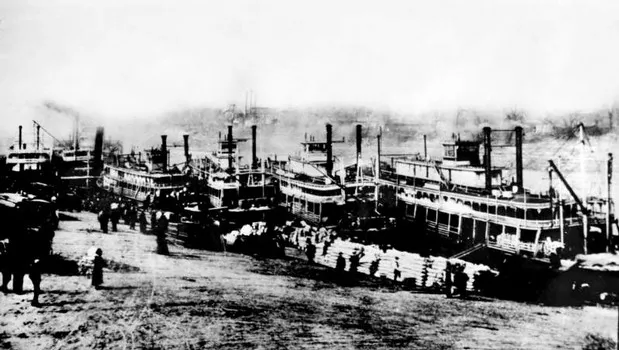
Nashville's first commercial roofs were built to protect goods moving along the Cumberland, tobacco, cotton, grain, and hardware. The roofing materials themselves arrived the same way, by flatboat and barge: tin from rolling mills in Chattanooga and Pittsburgh, slate from Virginia quarries, copper from Lake Superior. A warehouse roof in 1840 Nashville was a product of the same river commerce it sheltered.

The post-Civil War industrial expansion brought larger buildings, longer spans, and new roofing problems. Nashville's manufacturing district, centered along the railroads south of Broadway, needed roofs that could cover machine shops, foundries, and printing houses with clear-span interiors and no interior columns. Corrugated iron, the predecessor of today's PBR panel, arrived in the 1870s and 1880s as the solution: lightweight, rigid enough to span between purlins, and cheap enough to cover a ten-thousand-square-foot factory floor without bankrupting the owner. These corrugated roofs were painted with the same red lead oxide that covered every barn in Williamson County, and they leaked at every lap joint when the wind drove rain sideways. But they were fast to install, fast to replace, and good enough for the industrial pace of a growing river city.
The 20th century brought Nashville's commercial roofing into the modern era. Built-up roofing, layers of hot asphalt and felt mopped onto flat commercial decks, became the default for office buildings, department stores, and institutional structures from the 1920s through the 1970s. Standing seam tin, meanwhile, retreated from commercial use as asphalt and membrane systems took over the flat-roof market. The irony is that the profile geometry invented for Nashville's 1840s warehouses, concealed fasteners, interlocking seams, thermal float, would return a century and a half later as the premium commercial metal roofing system, now manufactured in Galvalume-coated steel with PVDF finishes and computer-modeled clip spacing. The technology changed completely. The engineering logic didn't change at all.
Hand-soldered tin seam roofs on timber-frame commercial buildings. Low-slope by necessity. Red lead primer the only coating. Roofing materials arrived by the same river barges the warehouses served.
Corrugated iron panels cover machine shops, foundries, and factories along Nashville's railroad corridors. Fast, cheap, and leaky at lap joints, but the ancestor of every PBR panel installed in Tennessee today.
Hot-mopped BUR systems become the default on Nashville's commercial buildings, offices, retail, schools, government. Metal retreats from commercial use as membrane systems take over flat-roof construction.
TPO and PVC replace BUR as the standard commercial membrane. Lighter, faster to install, and heat-welded for monolithic seams. Nashville's commercial boom drives massive adoption across retail and office construction.
Modern Nashville commercial buildings combine factory-coated Galvalume standing seam on pitched sections with TPO or PVC on flat — hybrid systems engineered for each building's specific slopes, spans, and codes. The 1840s seam logic returns in 21st-century materials.

Commercial roofing is more complex than residential — larger spans, code requirements, operational constraints, and multi-system designs. Here's how we move from first conversation to a finished, documented, performing roof.
We start by understanding your building: its age, current roof condition, slope, span, occupancy, and operational constraints. Are you running a warehouse that can't stop receiving trucks? A medical office that needs quiet during business hours? A restaurant with grease vents? These details shape every decision downstream — from system selection to staging and scheduling.
We walk the existing roof and document everything: current material condition, deck type, slope angles, drain locations, penetrations, equipment curbs, parapet details, and signs of moisture intrusion. We measure precisely — not from satellite images — because commercial roofs have details that aerial photography can't capture. Core samples may be taken to assess insulation condition and deck integrity.
Based on the survey, we design the roof system: which areas get metal, which get membrane, where drains go, how panels are laid out, what gauge and clip spacing meet wind code, and how equipment curbs and penetrations are flashed. Every detail is specified before a quote is issued. We don't estimate commercial roofs — we engineer them.
You receive a detailed proposal with system specifications, material lists, manufacturer documentation, warranty terms, work phasing, and a realistic timeline that accounts for your operational needs. For insurance or property management purposes, we include the Class A fire rating, wind design documentation, and panel/fastener specifications that carriers require.
Installation is staged around your operations. Standing seam and PBR systems are installed from the exterior — crews don't need to enter the building. Loud work can be scheduled for off-hours. Loading zones, parking areas, and tenant access points are maintained through the project. Safety zones are clearly marked and managed daily.
Before handoff, we inspect every seam, fastener, flashing, and drain detail. Membrane seams are probe-tested. Metal seams are visually inspected full-length. You receive a complete documentation package: manufacturer warranty registrations, as-built specifications, maintenance guidelines, and the insurance-grade documentation that supports your coverage. The roof is yours — and it's built to last.

We don't sell panels — we engineer roofing systems matched to your building's slope, span, code requirements, and operational needs. Every commercial project starts with a conversation about what your building actually needs. No cost. No obligation. Just a clear path to the right system.
Monday – Friday · 7:00 AM – 5:00 PM · Saturday by Appointment
Answers from our crews — drawn from commercial roofing projects across Middle Tennessee

It depends entirely on slope. Metal roofing systems work on pitches of 1:12 and above, depending on the specific panel type. Mechanically seamed standing seam can go as low as 1:12; snap-lock typically needs 3:12 or more; PBR performs best at 3:12 and above. Any section flatter than the minimum for the system being used still requires a membrane — TPO, PVC, or modified bitumen.
Most Nashville commercial buildings aren't 100% metal or 100% membrane. They're hybrids. A warehouse, shopping center, or office plaza in Franklin or Brentwood might get standing seam on the pitched front section and TPO on the rear section that sits nearly flat. This isn't a compromise — it's standard commercial roof engineering. Each material is used where it performs best, and the transition between systems is detailed with proper flashings and counterflashings to maintain waterproofing at the intersection.
For most Nashville commercial roofing projects, downtime is minimal to nonexistent. Standing seam and PBR systems are installed from the exterior — crews do not need to enter the building. This allows restaurants, clinics, manufacturing floors, and distribution centers to stay open with minimal interruption.
For retail centers in Franklin or medical buildings in Brentwood, loud work can be scheduled early or late in the day. For warehouses, lifts, cranes, and safety lines can be staged outside loading zones so trucks still operate. We build a phasing plan around your operations before work begins — not after. The goal is always the same: keep your business running while bringing the roof up to code and performance.
Over decades, yes — but only when the right system is matched to the building. A mechanically seamed metal roof on a low-slope warehouse in Nashville can last 40–50 years, while a budget membrane system may need replacement in 15–20. For retail centers and multifamily properties, PBR is often a cost-effective choice with quick installs and easy maintenance.
However, choosing the wrong panel for the slope — like exposed fasteners on a nearly flat roof — will cost more in repairs than it saves upfront. The real financial win comes from avoiding early tear-offs, avoiding interior damage during storms, avoiding tenant disruptions, and avoiding the chronic leak cycle that plagues undersized or improperly designed systems. That stability is where the real savings happen — not from picking the cheapest panel available.
Standing seam roofs are the ideal commercial platform for solar because panels clamp directly to the standing seam ribs with no roof penetrations — no holes, no sealant, no leak risk. This is something business owners in Franklin and Murfreesboro ask about constantly, and it's one of standing seam's strongest advantages on commercial buildings where solar economics make sense.
PBR and R-panel buildings can host solar too, but they require engineered mounts that penetrate the panel and address fastener points with proper flashing and sealant. Before adding solar to any commercial property, a structural evaluation is needed to confirm the building can carry the additional dead load — panels, racking, wiring, and potential snow or wind loads on the array. We can coordinate with solar installers to ensure the roof is designed to support future arrays even if you're not ready to install them today.
Most building owners assume insurance treats all commercial roofs the same, but carriers classify metal roofing by assembly, not just panel type. A commercial metal roof must be part of a Class A fire-rated system, meet local ~115 mph wind design, and show proper panel gauge, clip or fastener spacing, and substrate (typically AZ50 Galvalume).
If the building uses mechanically seamed standing seam on low slopes or PBR on steeper spans, carriers want to see manufacturer documentation proving the assembly matches code requirements. For larger warehouses or retail centers, properly documenting these details upfront often reduces claim disputes after hail or wind events because the carrier already knows the system meets code and is installed to spec. We include this documentation in every commercial project handoff — it's part of the package, not an add-on.
Nashville receives over 50 inches of rain annually, and much of it arrives in fast, heavy bursts during spring and summer storm systems. On wide, low-slope commercial roofs — the kind found on warehouses, distribution centers, and flex spaces in Brentwood and Franklin — drainage is the single biggest factor in long-term roof performance.
The roof needs enough internal or external drains, scuppers, and gutters to move heavy Tennessee rain off the building quickly, even during the kind of downpour that drops two inches in an hour. Mechanically seamed panels must be laid out with the slope and drain locations in mind so water never sits behind ribs or dead-ends at parapet walls. Ponding water is the number-one killer of commercial roofs — it accelerates sealant failure, promotes biological growth, and adds dead load the structure may not be designed to carry. We look at drainage first on every existing roof evaluation, and we design panel layout, gutters, and downspouts so the system can survive decades of Middle Tennessee rain events.
Business owners often think "this panel looks stronger," but wind performance is determined by how the panel is attached, not just its shape. Mechanically seamed standing seam uses floating clips engineered to handle uplift on long spans — ideal for Nashville warehouse roofs near open fields, highways, or hillsides where wind pressure increases.
PBR uses exposed fasteners, which must be spaced correctly and installed into a suitable substrate to meet wind code. In Brentwood and Franklin, where commercial roofs can sit higher above grade, uplift pressure increases — meaning panel gauge (24-ga vs. 26-ga), fastener type (ZAC vs. generic), and clip spacing all matter more than the aesthetic profile. Getting these details right is what keeps a roof on the building when storms move through Middle Tennessee.
Roof coatings make sense when the deck and membrane are structurally sound but the surface is showing age — oxidation, minor granule loss, fading, or small areas of moisture intrusion at fasteners and seams. If the deck is compromised, the insulation is saturated, or the membrane is failing across large areas, coatings won't solve the problem and a replacement is the right path.
On qualifying roofs, coatings cost a fraction of full replacement and can extend service life by 10–15 years. On metal roofs, elastomeric coatings seal exposed fasteners, tighten seams, and add reflectivity that reduces interior heat gain. On aged mod-bit or BUR, they restore UV protection and weatherability. We evaluate each roof honestly — if a coating is the right call, we'll tell you. If it's not, we'll tell you that too. Coating a failing roof to save money today just delays a more expensive problem.