Metal Roofing Alliance Member
TVA Preferred Partners Network
10,000+ Metal Roof Jobs
Nashville, TN
Licensed & Insured
BBB A+

Open 8am–8pm
(615) 649-5002Schedule Your
Appointment
Appointment
Our shop sits on East Trinity Lane in Nashville. Our crews have been on roofs from Franklin to Cookeville since 2003. When you call, you get the shop, not a call center in another time zone.
Twenty-plus years. A thousand-plus installs. One family name on every one of them.
4.9 stars across 150 reviews. BBB A+. TVA EnergyRight Preferred Partner. Metal Roofing Alliance member. Licensed in Tennessee and Alabama. We earned that the slow way, one roof at a time, and we are not about to risk it on somebody else's work.
Our neighbors kept asking us for solar.
A standing seam metal roof is the best surface there is to put solar on. Our customers knew it. They wanted panels on the roofs we had just finished, and they wanted us to point them to somebody we trusted to do it right.
We went looking for a solar partner in Tennessee. We could not find one.
We tried every installer we could find in Middle Tennessee. Not one of them understood metal roofing well enough to leave our work intact. We were not willing to hand our neighbors to a company we would not let touch our own roofs.
So we became the solar company we were looking for.
Same family. Same crews. Same standards we have held since 2003. Now the people who build the roof are the people who put the power on it, and there is one name on the whole thing.
%20-%20Bottom%20Left%20Header%20Banner-01%20(3).avif)
One roof. One warranty. One phone number.
The Metal Roofers installs rooftop solar systems, home battery backup, ground-mounted solar arrays, commercial solar systems, and EV chargers across Nashville and Middle Tennessee. One licensed crew designs, installs, and warranties every piece of it.
Tier 1 panels clamped to standing seam with zero roof penetrations. Shingle and exposed-fastener mounting too.
Powerwall 3 and Enphase IQ, with solar or standalone. Lights on when the grid goes down.
Fixed-tilt racking on acreage and farmland. No roof limits on system size or orientation.
50 to 700+ kW on warehouses, churches, and schools. Engineering through utility interconnection.
Level 2 home chargers and commercial fleet charging, plus the panel upgrades that come with them.
For years, our customers kept asking the same question:"Can you put solar on this new metal roof?"
We said yes, and we'd refer them to solar companies. That's when the problems started.
The solar installers would show up and drill straight through the standing seam panels we'd just spent two weeks perfecting. They'd lag bolt into the deck through brand-new underlayment. They'd route conduit across flashing details we'd hand-bent to shed water for fifty years. One solar crew actually drove a lift across a finished roof to reach a higher section to install panels. This is something we would NEVER do.
And when leaks appeared six months later? The solar company blamed the roofer. The roofer blamed the solar company. The homeowner, our customer, was stuck in the middle holding two warranties that both pointed at each other.
Now when we install a metal roof and solar panels on the same house, there's no gap in accountability. We designed the roof. We know where every clip, every seam, and every flashing transition sits. We know exactly where panels can mount without penetrating anything, because we built it.
If something leaks, there's one phone number to call. If something underperforms, there's one company responsible. If a panel needs to come off for a roof repair twenty years from now, we know how to do both without voiding either warranty.
That's the difference between a solar company that rents your roof, and a roofing company that owns the whole system.

The solar industry has a dirty secret: when your roof leaks under solar panels, the warranty fight begins. Here's how it plays out with two companies versus one.
Most solar installations on asphalt shingles require lag bolts drilled through the roof deck, and each one is a potential leak point. On a typical residential array, that's 40 to 80 new penetrations through your waterproofing layer.
Standing seam metal roofing eliminates that entirely. Solar panels mount to the raised seams using non-penetrating clamps that grip the seam mechanically. No holes. No sealant. No compromise to the waterproofing system underneath.
Check My Roof for SolarIf you put solar panels on an asphalt roof, you'll likely need to remove those panels, replace the shingles, and reinstall the panels at least once during the solar system's warranty period. That's $6,000 to $15,000 you didn't plan for, on top of the reroof cost.
A standing seam metal roof is a 50-year foundation for a 25-year solar investment. You install both once. You never think about it again.

We install Tier 1 monocrystalline solar panels from manufacturers with 25-year minumum product and performance warranties. Every system is designed around your specific roof geometry, shading profile, energy usage, and Nashville's 4.8 peak sun hours per day.
Not every array belongs on a roof. For homes on acreage, farms, and commercial land, we build ground-mounted systems on engineered racking: fixed-tilt arrays set at the ideal angle and orientation, trenched conduit back to your panel, and no roof constraints on system size. If you have the land, a ground mount is often the highest-producing option we install.
Most Nashville homes need 8–12 kW to offset 80–100% of electric usage. Final system size depends on your roof orientation, shading, and energy consumption.
Warehouses, manufacturing facilities, churches, schools, and retail. We handle roof assessment, structural engineering, electrical design, permitting, and NES interconnection.
Five panel lines, five different jobs. We match the panel to your roof, your budget, and how long you plan to stay, not to whatever's sitting in a warehouse. Every one of these is a module we've installed, serviced, and would stand behind for decades.

The premium pick: maximum output per square foot when roof space is tight. Its lead-free build and elegant all-black face make it the panel we recommend for showcase homes.

The dependable all-rounder: a bankable brand, a strong warranty, and clean all-black looks. When in doubt, this is the panel that makes everyone happy.
.avif)
The efficiency king, and the most power we can put on a roof today. Back-contact cells hide all the wiring behind the panel, so it looks as good as it performs.
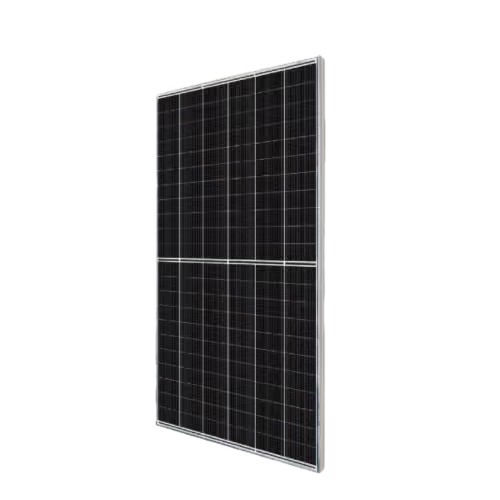
Our workhorse for warehouses, barns, and ground-mounted arrays. Fewer, bigger panels mean faster installs and a lower cost per watt on large projects.

Conservative and proven, backed by one of the oldest names in electronics. The AllGuard warranty covers the whole system, not just the module.
These are manufacturer ratings. We'll confirm current models and exact specs in your written estimate, since manufacturers update their lineups every year.

Tennessee doesn't offer true net metering, TVA's buyback rates are lower than what you pay for electricity. That means a battery often makes more financial sense here than in states with full net metering. Instead of selling your excess solar production back to NES at a discount, you store it and use it yourself when the sun goes down.
Batteries don't require solar. We install standalone home battery backup for homeowners who want the lights on when the grid goes down, and we add panels later when you're ready. We also install EV chargers: Level 2 home chargers, the panel and service upgrades that often come with them, and multi-port commercial charging. Charge your car on power your roof made.
Built-in solar inverter eliminates separate equipment. Enough continuous power to run refrigerator, lights, Wi-Fi, and even some A/C during an outage. The most popular residential battery for a reason.
Modular design lets you start small and add capacity later. Industry-leading 15-year warranty. Excellent integration with Enphase microinverter systems. Best for homes that want to grow into battery storage over time.
Nashville averages 5–7 severe weather events per year that cause power outages. In January 2025 alone, Middle Tennessee lost power for days during the ice storm. A battery keeps your refrigerator running, your heat on, and your phones charged, whether the grid is up or not. Solar alone shuts off during outages (by code). Solar with a battery keeps working.
In Tennessee the battery isn't an accessory. It's where the savings live. With no buyback from the utility, storing your excess power is the whole game, and the right battery is the difference between a system that pencils out and one that doesn't. Here's the lineup, from whole-home flagships to budget workhorses, all installed and serviced by our own crew.

The whole-home heavyweight. It starts your AC without flinching, and the built-in solar inverter keeps the install clean and the equipment count low.
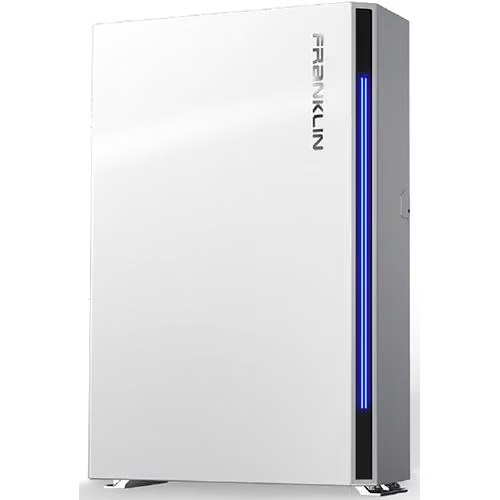
The biggest single-box capacity and the longest warranty of the flagships. Its aGate controller manages your whole home's loads automatically during an outage.
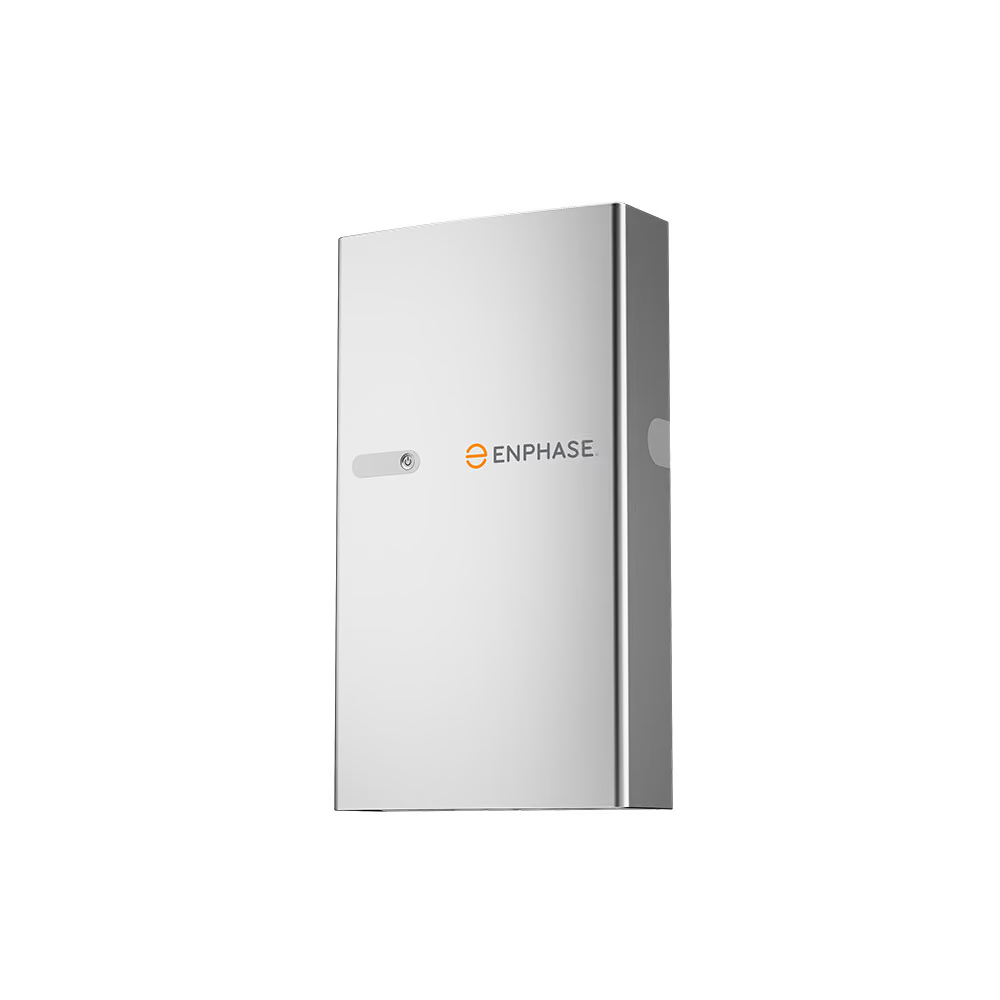
Start small and grow later. It's the natural partner to Enphase microinverters, and you can add more units any time your needs change.
.avif)
One power conversion instead of two, which means more of your solar production actually makes it into storage. It's the efficiency play in a SolarEdge system.
.avif)
From the standby-generator people, so backup power is in their DNA. The modular cabinet grows with you, three kilowatt-hours at a time.

Inverter and storage in one sleek box for a tidy install and easy expansion. It's one of the fastest batteries to add capacity to later.

Big capacity in one unit when wall space is at a premium. A compact footprint and quiet operation make it an easy battery to live with.

Modular whole-home storage from a brand that outlives its warranties. Stack it to fit anything from essentials backup to full-home coverage.

The budget workhorse and a favorite for shops, cabins, and off-grid builds. It delivers the most kilowatt-hours per dollar on this list by a wide margin.
These are manufacturer ratings. Capacity and output are what we design around, and we'll match the battery to your actual loads during your assessment, not to a brochure.
The lineup at the top of this page isn't decoration. Every one of these is a system we design, permit, install, and service with our own crew, no subcontractors and no finger-pointing. Here's what each one actually involves, who it's right for, and what to expect when we build yours.
Got acreage? A ground mount skips the roof entirely: engineered racking set in concrete, panels at the perfect tilt and azimuth, and a trenched line back to your service panel. There are no roof penetrations, cleaning and service are easy at ground level, and the array isn't limited by roof size, orientation, or shading. For a lot of rural Middle Tennessee properties, it's the highest-producing option available.
A 240-volt Level 2 charger turns your garage into your gas station, and if you have solar, daytime charging runs on power you made yourself. We handle the electrical work, the permit, and the inspection from start to finish. We'll also set up charging schedules that lean on your panels and off-peak hours, so every mile you drive costs as little as possible.
Warehouses, shops, barns, churches: big flat or metal roofs are solar goldmines, and standing seam lets us clamp panels on without a single penetration. We start with a load analysis of your actual utility data so the system attacks your real bill, including demand charges. And because we design around your operations, installation happens without shutting your business down.
When you do both at once, you save money, save time, and get a system that was designed together from the start, not cobbled together by two companies who never spoke to each other.
We inspect your existing roof, measure your roof geometry, assess shading from trees and neighboring structures, review your NES electric bills, and determine the right system size. If you need a new roof, we design the metal roof and solar layout together.
Our team designs the solar array around the roof, not the other way around. Panel placement accounts for seam locations, snow guards, ventilation clearances, and service access paths. Structural load calculations confirm your deck and framing can handle the added weight.
We handle Davidson County building permits, electrical permits, and the NES interconnection application. No paperwork for you. We know the local process because we file these every week.
Our roofing crew installs the standing seam system first: underlayment, panels, flashings, trim, and ventilation. The roof is complete and watertight before any solar equipment touches it.
Same crew, same week. Non-penetrating clamps mount to the standing seams. Panels, microinverters or string inverter, conduit, disconnects, and battery (if included) are installed and wired. No lag bolts. No new holes in your roof.
County electrical inspection, NES meter swap, system commissioning, and monitoring setup. We walk you through the app, show you your production data, and make sure everything is generating before we leave.
Here's a call we get every week: the roof under someone's panels needs replacing, the roofer says "call your solar company," the solar company says "call your roofer," and the homeowner is stuck in the middle with a leaking roof and two companies pointing at each other. We're both companies, so there is no middle. One phone call, one crew, one bill, and both systems handled by people who understand them.
We detach and safely store your panels, replace the roof, reset the racking, reinstall everything, and recommission the system, all on one schedule. Your panels are inventoried, labeled, and stored protected while the roof goes on. And if anything ever goes wrong afterward, there's exactly one point of responsibility: us.
We handle removal & reinstall on systems we didn't install, including installs from solar companies that are no longer in business. We document the system before teardown, replace worn hardware while it's accessible, and preserve your equipment warranties and monitoring setup. Orphaned system? You're exactly who this service exists for.
Panels last 25 years or more. Shingle roofs don't. If we're already taking your panels off, it's the cheapest moment you'll ever have to upgrade to a metal roof that outlives the system sitting on top of it. You skip the next reroof entirely, and the next panel removal and reinstall bill along with it.
Nashville gets approximately 4.8 peak sun hours per day on average. Not as high as Phoenix, but more than enough to make solar work. A properly designed system on a south-facing metal roof in Nashville will produce meaningful energy year-round.
The average Nashville household uses about 1,075 kWh per month, paying roughly 12¢ per kWh to NES. That's about $134/month. A 10 kW solar system in Nashville can produce approximately 13,500–14,500 kWh per year, enough to offset most or all of that bill.
The federal solar Investment Tax Credit (ITC) provided a 30% credit on solar system costs through the end of 2025. As of 2026, the residential ITC has expired for new installations. Commercial projects may still qualify for credits under different provisions. We'll walk you through what incentives are currently available during your consultation, the landscape is still shifting and we stay current on it.

Even without the federal credit, solar economics still pencil out in Nashville for most homeowners, especially when paired with a metal roof that eliminates the cost of removing and reinstalling panels for a reroof. That hidden $3,000–$6,000 cost every 20 years is what most solar calculators don't account for.
Tennessee doesn't have traditional net metering. TVA offers a net billing program where you're compensated for excess energy at a lower rate than what you pay to buy it. This means storing excess production in a battery and using it yourself is often more valuable than sending it back to the grid. We design every system with this in mind.

Plenty of solar companies will dance around this, so we'll just say it: Tennessee is not an incentive-rich state, and nobody here is going to pay you for your extra power. We'd rather you hear that from us before you sign anything than discover it after. Here's the real picture, and why solar still works in Nashville when it's designed for how Tennessee actually is.
Utilities in TVA territory, including NES, don't offer net metering. Power you export to the grid earns you little to nothing, and there's no program on the horizon that changes that. In Tennessee, solar pays you back by cutting the power you buy, not by selling what you don't use.
The 30% federal tax credit for homeowner-purchased systems ended December 31, 2025, and it has not come back. Commercial projects and some third-party-owned systems can still qualify for federal business energy credits, and those rules shift year to year. We'll tell you honestly whether any of it applies to you before you commit to anything.
The Green Energy Property Tax Assessment: your solar system raises your home's value, but only 12.5% of that added value counts toward property tax, so the tax hit stays small while the resale benefit stays real. Businesses also get sales-tax relief on qualifying equipment. That's about it, and we won't pretend otherwise.
With no buyback, oversizing is throwing money on the roof. We size for self-consumption, and batteries do the heavy lifting by storing your afternoon excess for the evening instead of donating it to the grid. It's also why our quotes are sometimes smaller than the other guys'. That's on purpose, and it's the reason our systems actually hit their payback numbers.
Cash isn't the only path. See our financing options for solar + roof projects.
Most homeowners think about roofing and solar as two separate purchases. But when you combine them into one project, several costs overlap and disappear:
Scaffolding and staging: set up once, not twice. Electrical rough-in: conduit paths planned during roof install, not retrofitted later. Permitting: one combined project, fewer fees. Project management: one company, one timeline, one point of contact.
On a typical Nashville home, doing roof + solar together saves $2,000 to $5,000 compared to hiring two separate companies at two separate times.
We'll pull your NES and other local energy provider usage, measure your roof from satellite, and give you a real estimate, not a generic calculator result.
Get a Free Solar + Roof EstimateWe don't chase whatever's cheapest this quarter. We install equipment we're certified on, we can service ourselves, and we'd put on our own houses. Every brand on this page earned its spot by surviving Tennessee weather, honoring its warranties, and still being around to answer the phone.
Every system goes live with app-based monitoring: panel-level production, battery state of charge, and outage alerts on your phone. We verify real output against the design estimate at commissioning, not just "it turned on." If production ever drifts below where it should be, you'll see it, and so will we.
Annual roof and solar inspections happen in one visit: one ladder, both systems, one report. We handle panel cleaning, critter guards, storm checks, warranty service, and repairs. We service systems we didn't install, too, so if your original installer disappeared, you're not on your own anymore.

Yes. If you have standing seam, it's one of the easiest roofs to add solar to. Non-penetrating clamps attach directly to the seams with no drilling. If you have an exposed fastener metal roof, we can still install solar, but the mounting approach is different and may require some penetrations. We'll assess your existing roof condition and remaining lifespan before recommending solar on top of it. There's no point putting a 25-year solar system on a roof that needs replacement in 10 years.
Panels alone will reduce your electric bill. But in Nashville, a battery adds two major benefits: backup power during outages (which happen 5–7 times a year in severe weather), and the ability to store your excess solar production instead of selling it back to TVA at a discounted rate. If you want maximum savings and resilience, we recommend panels plus at least one battery. If budget is a concern, panels alone still make sense, and you can add a battery later.
Typically 2–3 weeks from start to finish for a combined metal roof and solar installation. The roof itself takes 5–10 days depending on complexity. Solar installation adds 2–4 days. Permitting and NES interconnection can add 2–6 weeks of lead time, but we start that paperwork early so it doesn't delay your project. When you hire two separate companies, you're often looking at 6–10 weeks total with gaps between.
The 30% residential solar Investment Tax Credit expired at the end of 2025 for new installations. The incentive landscape is evolving. Some commercial provisions may still apply, and state or utility programs occasionally emerge. We stay current on available incentives and will walk you through exactly what's available at the time of your consultation. Even without the federal credit, solar still makes financial sense for most Nashville homeowners over a 25-year ownership period.
Not when we install both. Since we're the roofing manufacturer's authorized installer and the solar installer, there's no third-party work that could void your roof warranty. When a separate solar company installs on your roof, many roofing warranties are voided because the manufacturer didn't authorize those penetrations or modifications. With us, the whole system stays under warranty because one company built it all.
A properly sized system can offset 80–100% of your NES electric bill. For the average Nashville home paying $134/month, that's $1,200–$1,600 per year in savings. Over 25 years, even accounting for panel degradation (typically 0.5% per year) and rising electric rates (historically 2–3% per year in Tennessee), total savings commonly exceed $40,000–$65,000. We'll give you a specific projection based on your actual usage, roof orientation, and system size.
Solar panels alone shut off during a grid outage. That's a safety code requirement to protect utility workers. With a battery, your system disconnects from the grid and creates its own "island." Your panels keep producing, your battery stores and delivers power, and your home stays lit while the neighborhood is dark. A single Tesla Powerwall (13.5 kWh) can power essential loads for 12–24 hours depending on usage, excluding large loads like an HVAC air conditioning system. Two units can keep most homes running through multi-day outages with solar recharging during the day.
Yes. We offer financing options for combined roof and solar projects. Many homeowners find that the monthly payment on a financed metal roof plus solar, combined with the electric bill savings, is comparable to or less than what they were paying for electricity and future reroof costs before. We'll show you the real monthly math during your consultation.
Call us. We'll talk about your roof, your electric bill, and whether solar makes sense for your home. No pressure.