Metal Roofing Alliance Member
TVA Preferred Partners Network
Music City Specialists
Nashville, TN
Licensed & Insured
BBB A+
.avif)
Call Anytime
(615) 649-5002Free Estimate

Exposed fastener metal roofing is the screw-down ribbed steel roof system many Tennessee homeowners recognize on ranch homes, farmhouses, porches, barns, workshops, lake houses, churches, and rural properties. The panels have raised ribs, visible color-matched screws, and a practical look that fits homes where standing seam may be more roof than the project needs.
Exposed fastener panels are wider and faster to install. A 36-inch ribbed panel covers twice as much roof width as many 16- to 18-inch standing seam panels. The system also does not require concealed clips, floating clip layout, or mechanical seaming tools.
That lower cost is real, but it comes with a different maintenance profile. Standing seam hides the fasteners and lets panels move on clips. Exposed fastener roofing pins the panel through the face, so the fasteners and washers have to handle weather exposure and panel movement over time.

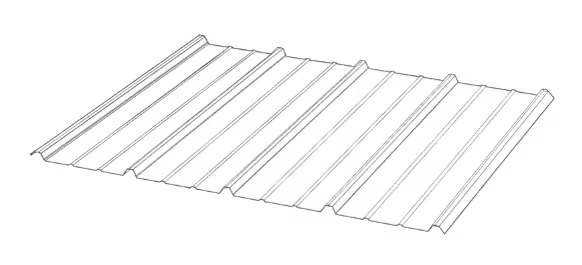
This is the residential workhorse of exposed fastener metal roofing. A classic rib or max-rib panel gives the familiar Tennessee metal roof look without feeling too commercial.
The typical profile uses 36-inch coverage, a 3/4-inch rib, and ribs on 9-inch centers. That three-foot coverage is why this system installs faster than standing seam. Fewer panels cover more roof, which helps keep the price lower.
Many classic rib profiles also use an anti-siphon or weather-side lap detail near the panel overlap. That side-lap design matters because wind-driven rain can push water sideways during storms. The panel profile, overlap, fastener placement, and lap sealant strategy all work together.
.avif)
R-Panel and PBR profiles have taller ribs and a stronger commercial look. They are common on barns, workshops, warehouses, agricultural buildings, equipment sheds, and open-frame structures.
PBR means purlin bearing rib. The lap side includes added bearing support so the panel has a better seat where it lands on framing. That makes the profile useful on post-frame buildings and certain commercial projects, but the same bold rib can look too industrial on a primary home.
.avif)
5V Crimp has a flatter, more historic Southern look than max-rib. It can fit cottages, porches, older farmhouses, lake houses, and homes where a standard ribbed panel would feel too industrial.
The tradeoff is coverage. Many 5V Crimp panels use 24-inch coverage instead of 36-inch coverage, so the roof takes more panels and more layout work. The benefit is appearance. On the right Tennessee home, 5V Crimp looks older, quieter, and more residential than a tall trapezoid rib.
.avif)
A 7.2 panel has a bold commercial or industrial look. It can be useful on large shops, agricultural buildings, commercial structures, and projects where span and rigidity matter more than a soft residential appearance.
The rib spacing is much tighter than a standard max-rib panel, and the rib height is usually deeper. That makes the panel feel strong and architectural on the right building, but it can overwhelm a normal residential roofline.
.avif)
Corrugated metal has the older wavy profile associated with barns, sheds, farm buildings, and rustic architecture. It can look excellent when the design calls for it, especially on rural homes, accent roofs, renovated barns, and farmhouse-style projects.
It should be chosen for style, not just price. On a formal brick home, strict HOA property, or higher-end residential roofline, corrugated may look too casual compared with 5V Crimp, standing seam, or metal shingles.
Rustic homes · Barns · Accent roofs · Farmhouse details · Outbuildings
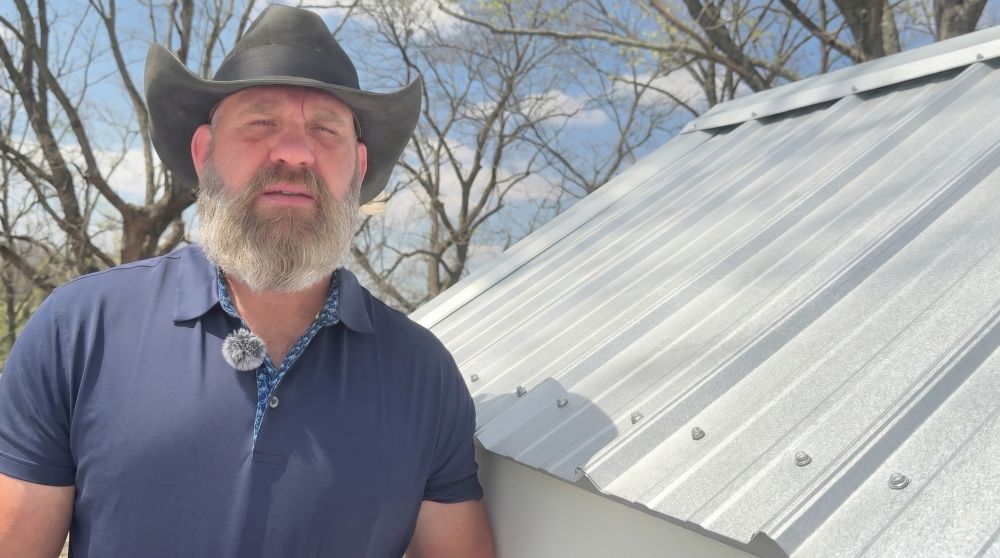
We install Classic Panel with ZAC® long-life screws, sometimes called "forever screws" in the industry. These are not the commodity hardware-store screws that built the reputation problems of old-school screw-down roofing. Here is what makes them different:
.avif)
Crushes washer beyond recovery — cracks, erodes, leaks within years
Washer not compressed — immediate entry point for water
Washer seals unevenly — partial compression, partial gap
.avif)
The bonded washer and engineered shoulder on ZAC® screws reduce the installation error window dramatically. The shoulder physically prevents over-driving. The bonded washer cannot separate from the head and tilt. The result is a fastener that is significantly harder to install wrong — which matters on a roof with hundreds of penetrations being driven by a crew in the field.
The difference between a screw-down roof that leaks in 7 years and one that serves 30+ years is almost entirely in the fastener. Premium long-life screws with bonded EPDM washers, engineered shoulders, and corrosion-resistant heads cost more than commodity screws, but the delta is pennies per screw, dollars per square, and thousands of dollars in avoided leak repairs over the roof's life.
.avif)
This is not a flaw in Classic Panel, it is a physical reality of any system where fasteners penetrate the panel. The engineering response is threefold: (1) keep panel runs short enough that cumulative expansion stays within the washer's sealing range, (2) use fasteners with oversized bonded washers that tolerate more movement, and (3) build a maintenance schedule that catches wear before it becomes a leak. When all three are in place, the system works reliably for decades.
Most manufacturers and experienced installers recommend keeping exposed fastener panel runs to 40 feet or less. Beyond that, cumulative thermal expansion creates enough movement at the fastener points that the long-term seal integrity becomes a concern — even with premium screws. Standing seam's clip system handles unlimited panel lengths because the panels float. For Classic Panel, keeping runs manageable is one of the most important design decisions in the project.
Keeps thermal movement within washer tolerance
Per daily thermal cycle in Nashville summer
Steeper = faster drainage = less fastener stress
29-gauge is perfectly adequate for residential Classic Panel installations over solid decking with moderate panel runs and normal Nashville weather loads. It is the gauge that makes Classic Panel affordable. 26-gauge adds roughly 30% more steel thickness, noticeably greater rigidity (less oil-canning), better hail resistance, and improved pull-through strength at fastener points. For homeowners who want the Classic Panel look but want to invest in a longer-lasting installation, 26-gauge is the upgrade we recommend most often.
Nearly all modern exposed fastener panels use Galvalume® — an aluminum-zinc alloy coating (55% aluminum, 43.4% zinc, 1.6% silicon) applied to the steel substrate. Galvalume provides excellent corrosion protection through a combination of aluminum's barrier protection and zinc's sacrificial protection. It is the industry standard for exposed fastener metal roofing and has been proven in service for over 50 years worldwide.
.avif)
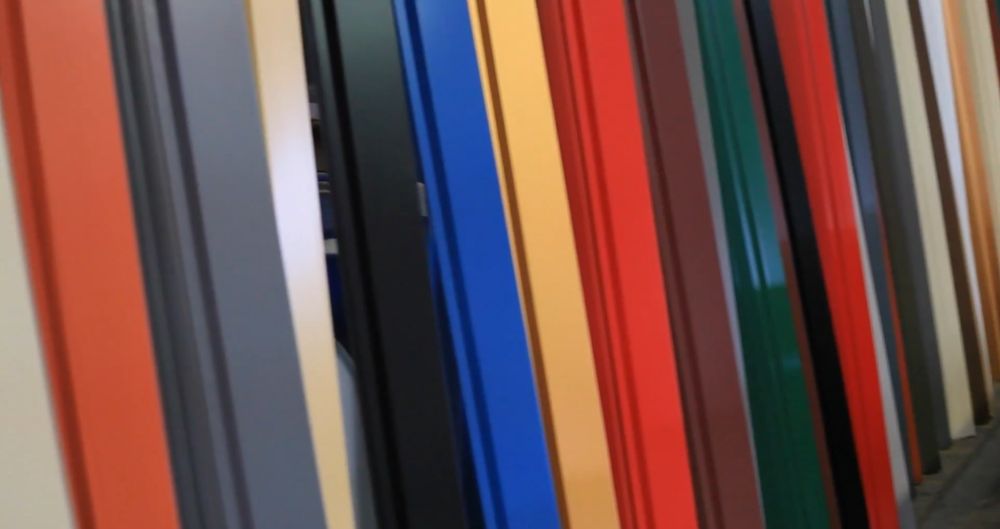
For most Nashville Classic Panel installations, SMP is the standard and sensible choice — it delivers good color retention at a price that keeps the project affordable. For homeowners investing in a Classic Panel roof that they expect to look at for 30+ years, PVDF (Kynar 500) is a meaningful upgrade that keeps the color true far longer. We offer both and help you decide based on your budget and how long you plan to own the home.
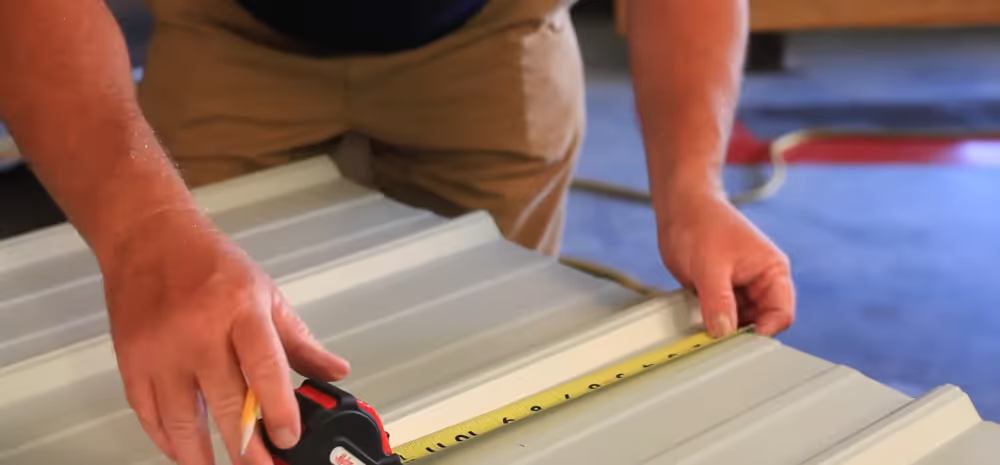
Same standard as our standing seam and metal shingle jobs: full tear-off to bare decking, deck inspection, soft spot repair, re-fastening to structural pattern. We do not install Classic Panel over old shingles.
Premium synthetic underlayment across the entire deck — this is the backup waterproofing plane and it matters more on an exposed fastener roof than on standing seam because there are more penetrations. We invest in the underlayment because it is the insurance policy.
Metal drip edge on all eaves and rakes. Foam closure strips at eaves and ridge to seal the rib openings against wind-driven rain, insects, and debris. Closures are often skipped by budget installers — we consider them non-negotiable.
Every screw driven perpendicular to the roof plane, to the correct torque — not over-driven, not under-driven. Bonded EPDM washers compress to proper seal without crushing. Color-matched heads. Screws placed in the flat of the pan (not the rib) on residential applications for optimal sealing.
Ridge cap, hip cap, gable trim, sidewall flashing, endwall flashing, valley pans, pipe boots — the complete trim package that gives Classic Panel a clean, finished, architectural appearance. Budget installers cut corners on trim. We do not.
Magnetic sweepers, debris removal, homeowner walk-through. We explain the maintenance schedule and leave documentation for the fastener type, pattern, and torque specification so any future service work uses compatible hardware.
You are not replacing every screw on the roof. You are replacing the ones that show wear — backed out, washer cracked, rust at the head, or hole elongated. With ZAC® long-life fasteners installed correctly, this is a fraction of the total fastener count. The replacement screw goes in one size larger diameter for a fresh grip in the hole. It is a straightforward maintenance task — not a re-roofing event. Think of it like replacing brake pads, not replacing the car.
Wind performance is driven by the fastener pattern and edge detailing. A properly fastened Classic Panel roof with screws on the manufacturer's specified pattern — including tighter spacing at eaves, rakes, and ridge where wind uplift concentrates — performs well in the 90–120+ mph range on most residential installations. The key vulnerability is progressive failure: if one screw backs out and a panel edge lifts, wind gets under the panel and peels it. This is why fastener maintenance and edge detailing matter.
Steel panels dent but do not fracture, crack, or lose waterproofing integrity from hail impact. A 29-gauge panel will show cosmetic dents from large hail more readily than 26-gauge. The dent is aesthetic, not functional — the panel still sheds water and the fastener seals remain intact. Some Nashville-area insurance carriers still offer metal roof discounts for Classic Panel, but the discount is typically less than the Class 4 discounts available for metal shingles and standing seam systems. Check with your carrier.
If your roof has comfortable slopes, short-to-moderate runs, and your budget favors value — Classic Panel with ZAC® long-life fasteners, a disciplined layout, and a complete trim package will deliver decades of service and a clean, confident look. If your roof has low slopes, long runs, or you want a zero-maintenance system that you never think about again — standing seam is the investment that justifies its premium. The right answer is the one that fits your roof, not a label on a panel box.
Toward the lower end ($5–$6/sq ft): Simple gable roof, 29-gauge panels, SMP paint, minimal penetrations, good deck condition, easy access, straightforward geometry.
Toward the upper end ($7–$9/sq ft): 26-gauge panels, PVDF paint, multiple hips/valleys, complex trim requirements, steep pitch, second story, deck repair needed, numerous penetrations.
Panels, fasteners, underlayment, closures
Ridge, hip, gable, sidewall, endwall, valleys
Tear-off, prep, installation, detail, cleanup
A Nashville homeowner facing a $12,000 asphalt re-roof can get a Classic Panel metal roof for $14,000–$18,000. That is a $2,000–$6,000 premium to go from a 15-year roof to a 30–50-year roof. On many homes, this is the single most cost-effective roofing upgrade available — and it is why Classic Panel is our fastest-growing product category.
Premium synthetic underlayment across the entire deck surface, not 30-lb felt, not the cheapest synthetic available. We specify high-temperature-rated synthetic that can handle the elevated temperatures under metal panels without degrading. At eaves, valleys, and all transitions, we install peel-and-stick ice-and-water shield membrane for belt-and-suspenders waterproofing at the most vulnerable points.
The underlayment on an exposed fastener roof is not a code-minimum checkbox, it is the insurance policy that keeps the building dry while you schedule that fastener maintenance visit. Budget installers save $300–$500 by downgrading underlayment. That savings evaporates with the first interior water stain from a single weeping screw. We consider quality underlayment non-negotiable on every Classic Panel project.
Farmhouses, ranches, and acreage properties where the ribbed metal profile is not just accepted but expected. No HOA restrictions. Classic Panel is the dominant metal roofing choice in rural Middle Tennessee.
Cottages, bungalows, and modest homes where the ribbed profile reads as practical and authentic. 5V Crimp adds heritage character to older homes with front porches and simple rooflines.
Budget-conscious suburban homes where the homeowner wants to break the asphalt cycle without the investment of standing seam. Simple ranch rooflines are ideal Classic Panel geometry.
The traditional exposed fastener application — and still the most common. Durable, affordable, fast to install. R-Panel and PBR profiles span open purlins without solid decking.
Brick colonials in Belle Meade and Green Hills, formal Williamson County subdivisions with strict HOA covenants, and contemporary custom homes in The Gulch or Germantown, these are architectures where the ribbed exposed fastener profile reads as agricultural rather than residential, and where metal shingles or standing seam are the better match. We will tell you if your home calls for a different system.
If any section of your roof has a slope below 3:12, if panel runs exceed 40 feet from eave to ridge, if the home has porch tie-ins or cricket details that create complex low-slope transitions, or if you are planning rooftop solar with non-penetrating clamps, standing seam becomes the conservative, correct choice. We price both systems in a single proposal when the roof geometry is borderline, so you can make the decision with real numbers.
We treat Classic Panel with the same professionalism, documentation, and attention to detail that we bring to standing seam. The product is different. The standard is the same.

With quality panels, ZAC® long-life fasteners, proper installation, and periodic maintenance, 40-60 years is a realistic expectation. The panels and paint last the longest. The fastener seals are the maintenance item, inspected periodically, replaced selectively as needed. Standing seam lasts longer with less maintenance, but Classic Panel outlasts asphalt by 2–3× at a fraction of the premium.
On a finished home with solid decking, underlayment, insulation, and drywall, the difference from asphalt is minimal. Heavy rain is slightly more audible, but not the "tin can" sound people imagine. That sound comes from open-framed agricultural buildings with no decking under the metal. On a properly built residential installation, it sounds like rain on a roof, because it is.
Many manufacturers allow it, and some installers do it. We don't. We tear off to the deck on every project so we can inspect the sheathing, fix soft spots, re-fasten loose boards, and install proper underlayment. Roof-over hides problems that eventually become expensive surprises.
It depends on the HOA and the neighborhood. Many Nashville-area HOAs in suburban developments specify "architectural shingle or equivalent" and the ribbed profile of Classic Panel does not meet that standard. In rural areas, unincorporated neighborhoods, and communities without strict covenants, Classic Panel has no restrictions. If your HOA is a concern, metal shingles (which mimic traditional roofing materials) have a 90%+ approval rate even in restrictive communities.
Typically 40–60% less installed. On a Nashville home where standing seam would cost $20,000–$30,000, Classic Panel often comes in at $10,000–$18,000. The savings come from wider panels (36″ vs. 16″), faster installation, no clips or seaming tools, and thinner gauge options. The trade-off is periodic fastener maintenance and a shorter maximum service life.
Eventually, selectively, yes. With ZAC® long-life fasteners, the timeline stretches to 15–20+ years before replacement is typically needed — and even then, it is the screws showing wear that get replaced, not every screw on the roof. This is a maintenance item, not a failure. It is far less expensive and disruptive than replacing an entire asphalt roof.
Some Tennessee carriers offer metal roof discounts for Classic Panel, though typically less than the Class 4 impact discounts available for metal shingles and standing seam systems. The exact discount varies by carrier. We recommend calling your agent with the product specification before the project to confirm what discount, if any, applies to your policy.
29-gauge is the industry standard for residential Classic Panel and is perfectly adequate for most Nashville homes over solid decking. 26-gauge is roughly 30% thicker, more rigid, more hail-resistant, and better at holding fasteners long-term. It adds roughly $0.50–$1.50 per square foot to the project, a modest premium for a meaningful upgrade. If budget allows, we recommend 26-gauge.
Yes, but the attachment method differs from standing seam. Solar on standing seam uses non-penetrating clamps that grip the seam. Solar on Classic Panel requires penetrating brackets that screw through the metal into the structure, adding more fastener penetrations. It works, but the flashing and sealing at those brackets must be done carefully. If solar is a high priority, standing seam is the more elegant solution.
Yes. We provide a lifetime workmanship warranty covering our installation quality, proper fastening, correct layout, waterproof flashing details, and code-compliant work. The panel manufacturer provides a separate product warranty covering the steel substrate and paint finish. We provide both warranty documents at project closeout along with the maintenance schedule.
We price both systems in a single Nashville proposal so you can compare real numbers on your actual roof. No pressure toward either option — just the information you need to make the right call.